Sunday, 1 March 2026

The Great Seth

The Great Seth

Seth: The Appointed Seed and the Incorruptible Generation

The Account in Book of Jubilees Chapter 4
Image

Image

Image

The narrative of Seth begins with the tragedy of Cain and Abel, preserved not only in Genesis but expanded in the Book of Jubilees. The text states:

“And in the third week in the second jubilee [64-70 A.M.] she gave birth to Cain, and in the fourth [71-77 A.M.] she gave birth to Abel, and in the fifth [78-84 A.M.] she gave birth to her daughter Âwân.”

The sacred chronology frames human history in jubilees and weeks of years. The first family unfolds within divine order. Yet disorder enters swiftly:

“And in the first (year) of the third jubilee [99-105 A.M.], Cain slew Abel because (God) accepted the sacrifice of Abel, and did not accept the offering of Cain.”

The moral rupture is stark. Acceptance and rejection expose the inward condition of the worshippers. The text continues:

“And he slew him in the field: and his blood cried from the ground to heaven, complaining because he had slain him.”

This cry anticipates later biblical imagery. Blood is personified as testimony. The earth itself becomes witness.

“And the Lord reproved Cain because of Abel, because he had slain him, and he made him a fugitive on the earth because of the blood of his brother, and he cursed him upon the earth.”

The curse is judicial, recorded cosmically:

“And on this account it is written on the heavenly tables, 'Cursed is he who smites his neighbour treacherously, and let all who have seen and heard say, So be it; and the man who has seen and not declared (it), let him be accursed as the other.'”

The heavenly tablets suggest that moral law precedes and transcends human record. Nothing is hidden. Therefore:

“And for this reason we announce when we come before the Lord our God all the sin which is committed in heaven and on earth, and in light and in darkness, and everywhere.”

Sin is universal in scope; confession is universal in obligation.

Adam and Eve mourn deeply:

“And Adam and his wife mourned for Abel four weeks of years, [99-127 A.M] and in the fourth year of the fifth week [130 A.M.] they became joyful, and Adam knew his wife again, and she bare him a son, and he called his name Seth; for he said 'GOD has raised up a second seed unto us on the earth instead of Abel; for Cain slew him.'”

Here Seth emerges as compensation, restoration, and continuation.


The Meaning of the Name Seth

The name Seth signifies “appointed,” “set,” or “placed.” As recorded:

“God has appointed another seed underneath Abel, because Cain killed him.”

The Hebrew root conveys the idea “to put, to set, to place.” Seth is not merely another child; he is divinely positioned. Abel had represented righteous worship; Cain represented rebellion. Seth occupies the office Abel once held.

Genesis affirms:

“And to Seth, to him also there was born a son; and he called his name Enosh. Then began men to call upon the name of Jehovah” (Gen. 4:26).

Enosh means mortal or miserable man. When humanity confronts its frailty, it begins to seek the Name. Seth thus becomes the bridge between loss and renewed devotion.


Seth in Hypostasis of the Archons

Image

Image

Image

Image

A parallel telling expands the drama:

“Now afterwards, she bore Cain, their son; and Cain cultivated the land. Thereupon he knew his wife; again becoming pregnant, she bore Abel; and Abel was a herdsman of sheep. Now Cain brought in from the crops of his field, but Abel brought in an offering (from) among his lambs. God looked upon the votive offerings of Abel; but he did not accept the votive offerings of Cain.”

The confrontation follows:

“And carnal Cain pursued Abel, his brother.
And God said to Cain, ‘Where is Abel, your brother?’
He answered saying, ‘Am I, then, my brother's keeper?’
God said to Cain, ‘Listen! The voice of your brother's blood is crying up to me! You have sinned with your mouth. It will return to you: anyone who kills Cain will let loose seven vengeances, and you will exist groaning and trembling upon the earth.’”

After judgment comes restoration:

“And Adam knew his female counterpart Eve, and she became pregnant, and bore Seth to Adam. And she said, ‘I have borne another man through God, in place of Abel.’”

The pattern is unmistakable: death answered by appointment.


Seth and the Law of Compensation

“The death of Abel is made good by the birth of Seth.”

This expresses a divine principle: restoration follows loss. The wound of murder does not nullify purpose. A seed remains. Seth becomes mediator of the pre-flood priesthood, replacing Abel in sacred function.

Genesis 4:25 records:

“25 And Adam proceeded to have intercourse again with his wife and so she gave birth to a son and called his name Seth, because, as she said: God has appointed another seed underneath Abel, because Cain killed him.”

Genesis 5:3 adds:

“When Adam had lived 130 years, he fathered a son in his own likeness, after his image, and named him Seth.”

Thus Seth is image-bearing in continuity. As Adam bore the image, Seth bears Adam’s likeness.


The Three Classes of Men

Cain, Abel, and Seth have been seen symbolically as three classes: material, soulful, and spiritual. Cain corresponds to the carnal; Abel to the righteous yet slain; Seth to the spiritual continuity.

Seth becomes “the symbolic Father and representative of ‘spiritual' believers.”

At 105 years:

“Seth became father to Enosh.”

He lived 912 years, according to Genesis 5:3–8.


The Wife of Seth: Azûrâ and Norea

The Book of Jubilees states:

“And in the sixth week [134-40 A.M.] he begat his daughter Azûrâ.”

And further:

“And in the fifth week of the fifth jubilee [225-31 A.M.] Seth took Azûrâ his sister to be his wife, and in the fourth (year of the sixth week) [235 A.M.] she bare him Enos.”

In the Hypostasis of the Archons another tradition appears:

“Again Eve became pregnant, and she bore Norea. And she said, ‘He has begotten on me a virgin as an assistance for many generations of mankind (the Pneumatic race).’ She is the virgin whom the forces did not defile.”

Eleleth declares:

“And these authorities (Archons) cannot defile you and that generation; for your abode is in incorruptibility, where the virgin spirit dwells, who is superior to the authorities of chaos and to their universe.”

And again:

“You (Norea), together with your offspring, are from the primeval father; from above, out of the imperishable light, their souls are come. Thus the authorities (Archons) cannot approach them, because of the spirit of truth present within them; and all who have become acquainted with this way exist deathless in the midst of dying mankind.”

Thus Seth’s line is portrayed as incorruptible in origin and protected in destiny.


Image and Likeness

Genesis 5:3 states:

“When Adam had lived 130 years, he fathered a son in his own likeness, after his image, and named him Seth.”

This mirrors Adam’s own creation in image and likeness. As Adam reflects the Elohim, Seth reflects Adam.

The Apocryphon of John declares:

“And when Adam recognized the likeness of his own foreknowledge, he begot the likeness of the son of man. He called him Seth, according to the way of the race in the aeons.”

Further:

“Thus, the seed remained for a while assisting (him), in order that, when the Spirit comes forth from the holy aeons, he may raise up and heal him from the deficiency, that the whole pleroma may (again) become holy and faultless.”

Seth is described as:

“the great incorruptible Seth, the son of the incorruptible man Adamas.”

The earthly Seth is image; the Great Seth is heavenly archetype. The “Great Seth” assumes a saviour role, descending to rescue the elect, “putting on” Jesus for that purpose.


Philo and the Symbol of Watering
Image

Image

Image

Image

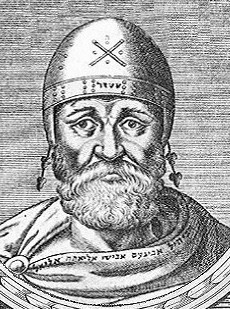
According to Philo of Alexandria:

“by name Seth, which name being interpreted means irrigation.”

F. H. Colson and G. H. Whitaker summarize:

“His name signifies ‘Watering,’ for the Mind waters the senses, as the Word of God waters the Virtues, which are symbolized by the four ‘heads’ of the river going out of Eden. The word ‘heads’ is used to indicate the sovereignty conferred by Virtues. The ‘River’ is the Word of God, ever flowing for souls that love God.”

Here Seth represents nourishment and governance. Just as rivers flow from Eden, so insight flows from divine source.


The Incorruptible Generation

The Elect are described as “the faultless ones.” Seth stands as father of the incorruptible generation. In some traditions he is an Aeon, an emanation of the incorruptible Man Adamas. The heavenly Seth descends; the earthly Seth images him.

The schema is consistent: Abel slain; Seth appointed. Loss answered by restoration. Murder countered by appointment. Deficiency healed by seed.


Conclusion

From Jubilees to Genesis, from the Hypostasis of the Archons to the Apocryphon of John, Seth stands as the appointed continuation of purpose. His name means set, placed, established. He replaces Abel not merely biologically but spiritually and priestly.

He is image of Adam as Adam is image of the Elohim. He fathers Enosh, in whose days men begin to call upon the Name. Through Azûrâ or Norea, a pure generation emerges. In mystical tradition, he is the Great Seth, incorruptible and salvific.

Thus Seth embodies restoration, appointment, image, mediation, and incorruptibility — the seed set in place so that purpose should not fail.


The Book of Jubilees Chapter 4:

  1. And in the third week in the second jubilee [64-70 A.M.] she gave birth to Cain, and in the fourth [71-77 A.M.] she gave birth to Abel, and in the fifth [78-84 A.M.] she gave birth to her daughter Âwân.
  2. And in the first (year) of the third jubilee [99-105 A.M.], Cain slew Abel because (God) accepted the sacrifice of Abel, and did not accept the offering of Cain.
  3. And he slew him in the field: and his blood cried from the ground to heaven, complaining because he had slain him.
  4. And the Lord reproved Cain because of Abel, because he had slain him, and he made him a fugitive on the earth because of the blood of his brother, and he cursed him upon the earth.
  5. And on this account it is written on the heavenly tables, 'Cursed is ,he who smites his neighbour treacherously, and let all who have seen and heard say, So be it; and the man who has seen and not declared (it), let him be accursed as the other.'
  6. And for this reason we announce when we come before the Lord our God all the sin which is committed in heaven and on earth, and in light and in darkness, and everywhere.
  7. And Adam and his wife mourned for Abel four weeks of years, [99-127 A.M] and in the fourth year of the fifth week [130 A.M.] they became joyful, and Adam knew his wife again, and she bare him a son, and he called his name Seth; for he said 'GOD has raised up a second seed unto us on the earth instead of Abel; for Cain slew him.'

Meaning of the Name
Seth his name signifies appointed. Eve's comment on the birth of this son reveals that Eve had a proper understanding of the purpose of God in him. The Hebrew word for 'appointed' (Isa. 22:7), TO PUT, TO SET, TO PLACE. (Gesenius).

According to Eve's words, Seth's name means "set", "appointed" or "placed". Seth replaced the position previously held by Abel, and therefore his name was expressive of God's mercy. Seth kept alive the principles of faith and hope that were distorted and destroyed by the descendants of Cain, introduced to us in the previous chapter. Seth commenced the genealogy of true worshippers. In him it was demonstrated that Godliness was possible among men

as she said: God has appointed another seed underneath Abel, because Cain killed him. This shows remarkable perception on Eve's part: She realised that Abel, because of his upright and godly way of life, had been the beginning of the line which would descend through her "until the seed should come". Therefore, in the birth of Seth she recognised Yahweh's guarantee that the seed would be continued until the divine purpose had been brought to fruition.
Mystic Meaning
The root idea of this name is that of a surrounding sympathetic movement that envelops a thing and defines its limits, places it, founds it, disposes of it. Some mystics have seen in the name Seth a law of destiny, that which predetermines a thing and settles its order.

While man is in a sense a creature of free will, yet in a larger sense he is a son of God, made in the image and likeness of God, and is destined to express and demonstrate spiritual perfection. There is in all the universe, including man, a balancing power of good, of perfection, which causes a readjustment, a healing, to set in after every transgression of the law, every wandering away from that which is wholesome and true. We find this set forth very clearly in Bible history and symbology. Man seems ever to have wandered away to the limit; then a great reaction has set in, and he has been led back to a saner level. Thus he evolves, grows; and finally he shall come into a full consciousness of his perfect good. His growth into Christlikeness is accelerated greatly as he comes into a knowledge of the Truth that makes free, and thinks and acts consciously, voluntarily, in harmony with it.

"And to Seth, to him also there was born a son; and he called his name Enosh. Then began men to call upon the name of Jehovah" (Gen. 4:26). Enosh means a miserable man, mortal man; it is when man comes to the end of his personal resources and sees the nothingness of all his efforts in the outer, apart from Spirit, that he begins to look for a higher power to express in his life--he calls upon the name of Yahweh. It is the activity of the awakening spiritual ideals within him (Seth) that causes him first to realize the futility of his human efforts to better himself, and then to recognize the one Source of all true uplift and good.

by name Seth, which name being interpreted means irrigation; Philo of Alexandria On the Posterity of Cain and His Exile

F. H. Colson and G. H. Whitaker write (Philo, vol. 2, pp. 323-327): His name signifies "Watering," for the Mind waters the senses, as the Word of God waters the Virtues, which are symbolized by the four "heads" of the river going out of Eden. The word "heads" is used to indicate the sovereignty conferred by Virtues. The "River" is the Word of God, ever flowing for souls that love God. 
The Death of Abel and the Birth of Seth
Now afterwards, she bore Cain, their son; and Cain cultivated the land. Thereupon he knew his wife; again becoming pregnant, she bore Abel; and Abel was a herdsman of sheep. Now Cain brought in from the crops of his field, but Abel brought in an offering (from) among his lambs.God looked upon the votive offerings of Abel; but he did not accept the votive offerings of Cain.
And carnal Cain pursued Abel, his brother.
And God said to Cain, "Where is Abel, your brother?"
He answered saying, "Am I, then, my brother's keeper?"
God said to Cain, "Listen! The voice of your brother's blood is crying up to me! You have sinned with your mouth. It will return to you: anyone who kills Cain will let loose seven vengeances, and you will exist groaning and trembling upon the earth (The Hypostasis of the Archons)

And Adam knew his female counterpart Eve, and she became pregnant, and bore Seth to Adam. And she said, "I have borne another man through God, in place of Abel." (The Hypostasis of the Archons)

We lean from the Hypostasis of the Archons that both Cain and Abel made offerings to God Cain was rejected Seth becomes a priest in place of Abel

The death of Abel is made good by the birth of Seth. Seth comes to make up for the loss of Abel, and this fact parallels how God’s law works for us. This particular law of God is the one which sees to it that a compensation comes to make up for what seems to have been taken out.

the three classes of men, ‘material' or carnal, ‘soulful' or those who have not yet awakened to the higher consciousness, and 'spiritual' those who have entered into the Christ consciousness, correspond to Cain, Abel, and Seth.

Seth is therefore the symbolic Father and representative of ‘spiritual' believers.
The Birth of Seth
25 And Adam proceeded to have intercourse again with his wife and so she gave birth to a son and called his name Seth, because, as she said: God has appointed another seed underneath Abel, because Cain killed him. (Genesis 4 NWT).

Genesis 5:3 When Adam had lived 130 years, he fathered a son in his own likeness, after his image, and named him Seth.

Seth the son of Adam and Eve born when Adam was 130 years old. Eve named him Seth because, as she said, “God has appointed another seed in place of Abel, because Cain killed him.” Seth may not have been the third child of Adam and Eve. According to Genesis 5:4, Adam had “sons and daughters,” some of whom may have been born before Seth.

And he begat sons and daughters" — Many other sons and daughters were born to Adam and Eve in addition to those named, and from these Cain and others obtained their wives. Hence the appointment of Seth to replace Abel means more than the mere birth of a son; it represented the appointment of this son to the position of privilege as legal "firstborn" with its office of priesthood and leadership within the family of Adam.

So Seth begins to look for a higher power to express in his life--he calls upon the name of Yahweh. It is the activity of the awakening of the spiritual consciousness within him that causes him first to realize the pointlessness of his human efforts to better himself, and then to recognize the one Source of all Truth.

Seth was appointed by God after the death of Abel in office of priesthood because both Abel and Seth were mediators of pre flood office of priesthood

Seth is worthy of note because through him the present-day race of mankind, descended from him, not from the murderous Cain. At the age of 105 years Seth became father to Enosh. Seth died at the age of 912 years .—Gen 4:17, 25, 26; 5:3-8; 1Ch 1:1-4; Lu 3:38.
The wife of Seth
The wife of Seth is Norea. She is the undefiled daughter of Eve who, together with Seth, gives birth to the Sons of Seth:

And Adam knew his female counterpart Eve, and she became pregnant, and bore Seth to Adam. And she said, "I have borne another man through God, in place of Abel." Again Eve became pregnant, and she bore Norea. And she said, "He has begotten on me a virgin as an assistance for many generations of mankind (the Pneumatic race)." She is the virgin whom the forces did not defile. (The Hypostasis of the Archons)

According to the Biblical Antiquities of Pseudo-Philo 1:1 Adam begat three sons and one daughter, Cain, Noaba, Abel and Seth.

The Book of Jubilees 4:8 And in the sixth week [134-40 A.M.] he begat his daughter Azûrâ.
The Book of Jubilees 4:11 And in the fifth week of the fifth jubilee [225-31 A.M.] Seth took Azûrâ his sister to be his wife, and in the fourth (year of the sixth week) [235 A.M.] she bare him Enos.

Seth's sister/wife in Jub 4:11 Azura the name Azura in trun may recall Hebrew 05828 עזר  (Greek 996 βοήθεια) In the the Hypostasis of the Archons the word [assistance] or help is used this is the Greek 996 βοήθεια (A Guide to Early Jewish Texts and Traditions in Christian Transmission)

Azura was the daughter of Adam and Eve and the wife (and sister) of Seth in the Book of Jubilees, chapter 4 in the Hypostasis of the Archons her name is given has Norea.  Norea is the daughter of Eve and the younger sister of Seth; both are members of the pure race.

Norea is said to be the syzygy of Seth a female equivalent of his male savior figure

The earthly Adam and Eve begot the earthly Seth and his sister Norea. With the aid of Norea, Seth’s descendents will preserve the pneuma and gnosis in the Lower Aeons. This schema appears in The Hypostasis of the Archons and The Apocalypse of Adam.

Eleleth reveals to Norea that the Archons cannot defile her or her descendents: 

“And these authorities (Archons) cannot defile you and that generation; for your abode is in incorruptibility, where the virgin spirit dwells, who is superior to the authorities of chaos and to their universe.” (Hypostasis of the Archons)
- Again: 

“You (Norea), together with your offspring, are from the primeval father; from above, out of the imperishable light, their souls are come. Thus the authorities (Archons) cannot approach them, because of the spirit of truth present within them; and all who have become acquainted with this way exist deathless in the midst of dying mankind.”(Hypostasis of the Archons).

- Hence, the Elect are without fault, and called the “faultless ones” (Tripartate Tractate)

Image and Likeness
Genesis 5:3 When Adam had lived 130 years, he fathered a son in his own likeness, after his image, and named him Seth.

The import of the phrase 'in the image, after the likeness' is suggested by the testimony that 'Adam begat a son in his own likeness, after his image, and called his name Seth.' In this respect, Seth stands related to Adam, as Adam did to the Elohim ... The very same thing is meant by Adam being in the image of the Elohim ... The resemblance therefore of Adam to the Elohim as their image was of bodily form ... In shape, Seth was like Adam, Adam like the Elohim, and the Elohim the image of the invisible Uncreated, the great and glorious Archetype of the intelligent universe."

the apocryphon of John

And the two archons he set over principalities, so that they might rule over the tomb. And when Adam recognized the likeness of his own foreknowledge, he begot the likeness of the son of man.
He called him Seth, according to the way of the race in the aeons. Likewise, the mother also sent down her spirit, which is in her likeness and a copy of those who are in the pleroma, for she will prepare a dwelling place for the aeons which will come down. And he made them drink water of forgetfulness, from the chief archon, in order that they might not know from where they came.
Thus, the seed remained for a while assisting (him), in order that, when the Spirit comes forth from the holy aeons, he may raise up and heal him from the deficiency, that the whole pleroma may (again) become holy and faultless."

Seth is now called the son of man the image and likeness modeled on the pleroma "the great incorruptible Seth, the son of the incorruptible man Adamas".

Adam was modeled on the Man Eve was modeled on Epinoia now Seth born of these two is modeled on the Son of Man "the Man exists and the son of Man"

Seth is the father of the incorruptible generation

Seth is an Aeon an emanation of the incorruptible man Adamas. Seth is the father of the incorruptible generation. The ‘Great Seth' is the heavenly son of Man, the mortal Seth is an 'image' of the heavenly Son of Man

The great incorruptible Seth also plays a saviour role, for he is sent into the lower world to rescue the elect, ‘putting on' Jesus for that purpose.


Know Yourself Trimorphic Protennoia

Know Yourself

Trimorphic Protennoia

When I come to you, dear brothers and sisters, I didn't use lofty words and impressive wisdom to tell you God's secret plan.

These opening words establish the tone: revelation does not come through rhetorical brilliance or philosophical display. It comes through disclosed wisdom. The emphasis is not on eloquence but on unveiling.

This is how I speak, not in words taught us by human wisdom but in words taught by the Spirit, explaining spiritual realities with Spirit-taught words.

Here the contrast is between human instruction and revealed instruction. Knowledge is not self-generated speculation. It is transmitted through spirit-breath, through utterance that originates beyond ordinary reasoning.

But I declare the things of God with God's wisdom, I give to you his mysteries that has been hidden and that God destined them for our glory before time began.

Knowledge, then, is eternal in origin. It precedes time. It is destined “for our glory.” The hidden plan is not merely information; it is transformative disclosure.

It is with these Mysteries that we come to know our selves, and are saved from the sins of this world along with its punishments.

And the conclusion:

So learn the Mysteries of God and get to KNOW YOUR SELF!!!!!!

The call is clear. Knowledge leads to self-recognition. Self-recognition leads to liberation.


Knowledge in the First Descent

In Trimorphic Protennoia, knowledge is central from the beginning. First Thought declares:

I counsel those who are hidden, since I know the whole realm of all that exists in it.

Knowledge here is total comprehension. It is not partial awareness but intimate familiarity with the entire structure of reality.

She continues:

Through me knowledge comes. I am in the ineffable and unknowable. I am perception and knowledge, uttering a voice by means of thought.

Knowledge is not an abstract concept; it is embodied in her. She is both perception and knowledge. Knowledge flows through her descent.

Again she says:

I cry out in everyone, and they recognize it, since a seed lives in them.

Recognition implies prior belonging. Knowledge awakens something already present. It is not imposed from outside but activated from within.

And most striking:

Through me came the voice: the knowledge of everlasting things.

Knowledge concerns what is everlasting — not fleeting, not bound to the current realm. The knowledge given is knowledge of permanence.

Finally:

I revealed myself in all who know me.

To know her is to receive her revelation. Knowledge here is relational. She reveals herself to those who know her — and they know her because she dwells in them.

This corresponds exactly with your proclamation: knowledge is how we “come to know our selves.” Recognition of her voice is recognition of origin.


The Son and the Making Known

The Son’s activity intensifies the theme:

The son revealed the everlasting, and all the unknown was known. He revealed what is hard to interpret and what is secret.

The unknown becomes known. Revelation is illumination. What was hidden becomes accessible.

Further:

He preached to those who live in silence with first thought, and he revealed himself to those who are in darkness, and he clarified himself to those in the abyss.

Darkness represents ignorance. Clarification represents knowledge. Illumination dispels obscurity.

Knowledge is therefore not accumulation of data; it is the removal of obscurity.


Ignorance of the Rulers

The text contrasts knowledge with ignorance. When the chief creator fashions humanity, we read:

He didn’t know that his creation would be a decree of his annulment, nor did he recognize the power in him.

Ignorance marks the ruler’s limitation. He does not know the consequence of his own act.

Later, the powers confess:

We don’t recognize the voice, nor to whom we belong, for the voice that we heard is foreign and its origin unknown.

Ignorance leads to fear. They tremble because they lack knowledge.

They admit:

For look, even the chief creator of our birth, about whom we boast, did not know this speech.

The speech — the voice of revelation — exposes ignorance. Knowledge destabilizes false authority.

Your words echo this reality: we are saved “from the sins of this world along with its punishments.” Sin flows from ignorance; knowledge dissolves it.


Knowledge in the Second Descent

In the Second Descent, knowledge is explicitly declared:

Knowledge is in me, a knowledge of things everlasting. I speak in every creature, and I was known by all.

Knowledge of everlasting things resides in her being. She speaks in every creature — meaning knowledge is universally accessible, yet not universally received.

She lifts her speech:

I lift up the speech of the voice to the ears of those who have known me, the children of light.

Knowledge distinguishes the children of light. They have known her.

Again she says:

I cast the voice’s speech into the ears of those who know me.

Knowledge involves hearing — receiving — responding.

And she declares:

I hid in everyone and revealed myself in them, and every mind seeking me longed for me.

Seeking leads to longing. Longing leads to revelation. Revelation leads to knowledge.

Your call — “get to KNOW YOUR SELF!!!!!!” — resonates here. The self is the place where she hides. To know oneself is to discover the hidden voice within.


Knowledge and Transformation

The Third Descent intensifies the transformative aspect.

She announces:

Look, I will reveal my mysteries because you are my brothers and sisters, and you will know them.

Knowledge is promised.

Later, describing the rescued one, she says:

I stripped him of inferior thought and clothed him in shining light: knowledge of the thought of fatherhood.

Knowledge is clothing. Ignorance is stripped away; light is put on.

And most powerfully:

He received the five seals… and it was granted him to partake of the mystery of knowledge, and he became a light in light.

Knowledge results in transformation — becoming “light in light.”

Thus knowledge is not theoretical awareness. It is ontological change.


The Pattern of Knowing

The structure across the three descents reveals a pattern:

  1. She knows all.

  2. She gives knowledge.

  3. The children of light know her.

  4. The rulers do not know.

  5. Knowledge transforms into light.

Ignorance produces fear and bondage. Knowledge produces clarity and freedom.

Your declaration states:

It is with these Mysteries that we come to know our selves.

In Trimorphic Protennoia, self-knowledge is inseparable from divine knowledge. She dwells in everyone. She says:

I am in everyone.

Therefore, to know her is to know the deepest layer of one’s own being.


Knowledge Before Time

You wrote that the mysteries were “destined… before time began.” The text aligns with this pre-temporal dimension. Knowledge concerns “everlasting things.” It is not confined to the present age.

The rulers’ realm is temporal:

“Birth cries out; hour gives birth to hour…”

But knowledge concerns what does not change.

Knowledge connects the knower to what precedes and outlasts time.


Know Yourself

To know yourself is not narcissism. It is recognition of origin.

She says:

I cry out in everyone, and they recognize it, since a seed lives in them.

Recognition is awakening.

She says:

I revealed myself in all who know me.

Knowledge and revelation meet in the self.

The rulers “didn’t know the root and source of their growth.” Ignorance hides the root. Knowledge reveals it.

Thus to KNOW YOUR SELF is to:

  • Hear the voice within.

  • Recognize the seed.

  • Perceive the everlasting.

  • Strip off ignorance.

  • Put on shining light.

  • Become light in light.

Knowledge is salvation. Knowledge is liberation from ignorance. Knowledge dissolves darkness.

And so the proclamation stands:

So learn the Mysteries of God and get to KNOW YOUR SELF!!!!!!

For when the hidden voice is known, when the everlasting is recognized, when the seed awakens — then the scattered thought gathers into one appearance, darkness dissolves, ignorance dies, and the knower stands firm in light.

Knowledge is not merely something you possess.
It is what you become.

A Mystery shared with the Brethren Trimorphic Protennoia

A Mystery shared with the Brethren

Trimorphic Protennoia

Greetings to you my brothers and to my sisters, greetings to one and all.

Let me share with you this Mystery. Remember, at the first I came looking for you, and once I found you all I encouraged you to seek out the Mysteries of the kingdom of light, and asked you to renounce this world with all its sins and cares, that you may be found worthy of the mysteries of the kingdom of light, which will save you and deliver you from the punishment of the rulers of this world.

My brethren, for some time at the first I listened to many of you speak of gods, of heaven, of enlightenment, goddesses, others of magic, and there were others among you speaking of gnosis. But it appeared to me that even many of you, as the others spoke of these things, did so without knowledge and lacked understanding of the things that were spoken.

So I told you — that is to say, to some of you — that I would go to the realms of the things you spoke of. Once I arrived there I changed my form, from form to form, as I dealt among the many different beings, being careful not to reveal myself to any. In the moments I was there, weeks had passed here on this earth.

Before I left I had one stay by my body for the continuity of its existence, that it would appear that I had not left. While being there I found much deception even among them in their various realms. Among their priests they spoke of a creator of all things while they possessed no real knowledge of him, only that they knew he existed.

To them, to be “god” is to be what we here on earth would call the first parent, or to be the chief ruler over a world or worlds. One would succeed another, becoming chief ruler and trying to be much greater than him whom he succeeded. They abided by the commands of the first ruler that begot them all. There was a son who passed down these commands to Moses, which were never meant for mankind. These laws were meant for those of the immortal realms and heavens — which were no heavens at all but planets, worlds.

They spent much time centered around their bloodlines and having servants. I said to myself, how can this be? The two have the same nature, and even they were deceiving and being deceived among themselves. Again I said to myself, my brothers and sisters must know these things — but how shall I tell them?

So brothers and sisters, I shall give an account of all the things that were said, trying carefully not to leave anything out over the next few days. But know this: I found no mysteries among them — only the darkness of ignorance. Very few of them have knowledge of themselves. The wisest among them consult with the aeons that dwell in the realms above them.

It was then that I understood the voice of First Thought in Trimorphic Protennoia, when she declares:

“It is immeasurable, since it is in the immeasurable one. It is a mystery, unrestrained by the intangible. It is invisible to all who are visible in the realm of all. It is light in light.”

The mystery is not among the rulers. It is not among those who boast of dominion. It is hidden from those who claim to be supreme. It is light in light — unseen by those who dwell in darkness.

When I heard their rulers boast, I remembered the words spoken against the chief creator:

“Didn’t we hear you say, ‘I am god, and I am your father and it is I who produced you, and there is no other god but me’?”

And yet the powers confessed:

“The voice that we heard is foreign and its origin unknown.”

This is the condition of those realms: boasting without knowledge, authority without understanding, rule without light.

But the Mystery is not like this.

First Thought proclaims:

“I will reveal myself to those who have heard my mysteries, the children of light.”

And again:

“I shall tell you an utterly ineffable and unspeakable mystery: I tore off from you the bonds and broke the chains of the underworld demons… I overthrew the high walls of darkness.”

Brothers and sisters, this is the Mystery I share with you — not one of domination, not one of succession of rulers, not one of bloodlines and servitude — but one of liberation.

The rulers create in ignorance. It is written:

“None of the powers knew me, though I work in them. They thought they created everything, because they are ignorant. They didn’t know the root and source of their growth.”

So too in those realms I visited: they thought themselves creators, yet did not know the root. They spoke of origin yet lacked understanding of themselves.

The Mystery hidden from them is this:

“You have earned the right to own the mystery hidden from eternity. Now accept it.”

Hidden from eternity — concealed before the formation of chaos, before the boasting of rulers, before the laws given in ignorance.

When First Thought descends, she says:

“Stop, stop, you who walk on matter. Look, I am coming down to the world of mortals for my portion.”

This descent is not for the rulers but for the portion that belongs to light. It is for the spirit in the soul.

She declares:

“I went under their language and spoke my mysteries to my own — a hidden mystery — and the bonds and eternal oblivion were nullified.”

The Mystery shared with the brethren is spoken under the language of the rulers. It is not recognized by them. It is heard only by those in whom the seed lives.

The rulers tremble when they hear it:

“Our entire world has been shaken… our way up… no longer exists for us.”

For the Mystery reveals that their dominion is temporary. Time itself trembles:

“Birth cries out; hour gives birth to hour… the elements trembled.”

But to the children of light, the Mystery is invitation:

“I invite you into the high perfect light. When you enter light, you will be glorified… and you will become exceedingly glorious, the way you first were when you were light.”

This is not ascent to serve rulers. It is restoration to original light.

The text culminates in transformation:

“He received the five seals… and it was granted him to partake of the mystery of knowledge, and he became a light in light.”

The Mystery is knowledge — not of systems, not of hierarchies, but of origin.

And so I say again to you, brothers and sisters: learn of the mysteries of the kingdom of light. For in these mysteries you will learn of yourselves and come to know yourself — then you will become known.

For First Thought says:

“I hid in them until I revealed myself among my members, which are mine.”

The Mystery is shared only with the brethren — those who are her members.

She concludes:

“I proclaimed the ineffable five seals to them so that I might live in them and they in me.”

This is communion, not command.

This is illumination, not domination.

This is the Mystery shared with the brethren.

And when she says:

“My seed and I are unrestrained. My seed is mine. I shall place it in holy light in intangible silence.”

We understand that the Mystery is not inherited by bloodline, nor seized by power, nor granted by rulers. It is awakened within.

Brothers and sisters, I found no mysteries among the rulers — only ignorance. But here, in the voice of First Thought, the Mystery is light in light.

Therefore renounce the boasting of the realms. Renounce the claims of those who say, “I alone am god.” Seek instead the Mystery hidden from eternity.

For the Mystery is not found in domination but in knowledge.

Not in succession but in origin.

Not in planets called heavens but in light that cannot be shaken.

And when you receive it, the bonds will fall, the chains will break, and darkness will dissolve.

This is the Mystery shared with the brethren.

Amen.