
The Broken Jars in the Gospel of Thomas and the Gospel of Truth: Greek Philosophy and the Parable of the Vessel
The image of the broken or leaking jar is one of the most striking metaphors to travel from Classical Greek philosophy into early Christian literature. In Plato’s moral psychology, the jar represents the condition of the human interior. In Cynic practice, the jar becomes a physical protest against excess. In Epicurean thought, it becomes a demonstration of mortality. In the Gospel of Thomas and the Gospel of Truth, however, the jar becomes an image of spiritual disorder, loss, purification, judgment, and restoration. Across these traditions, the vessel stands for the human condition itself.
The Leaky Jar in Greek Philosophy


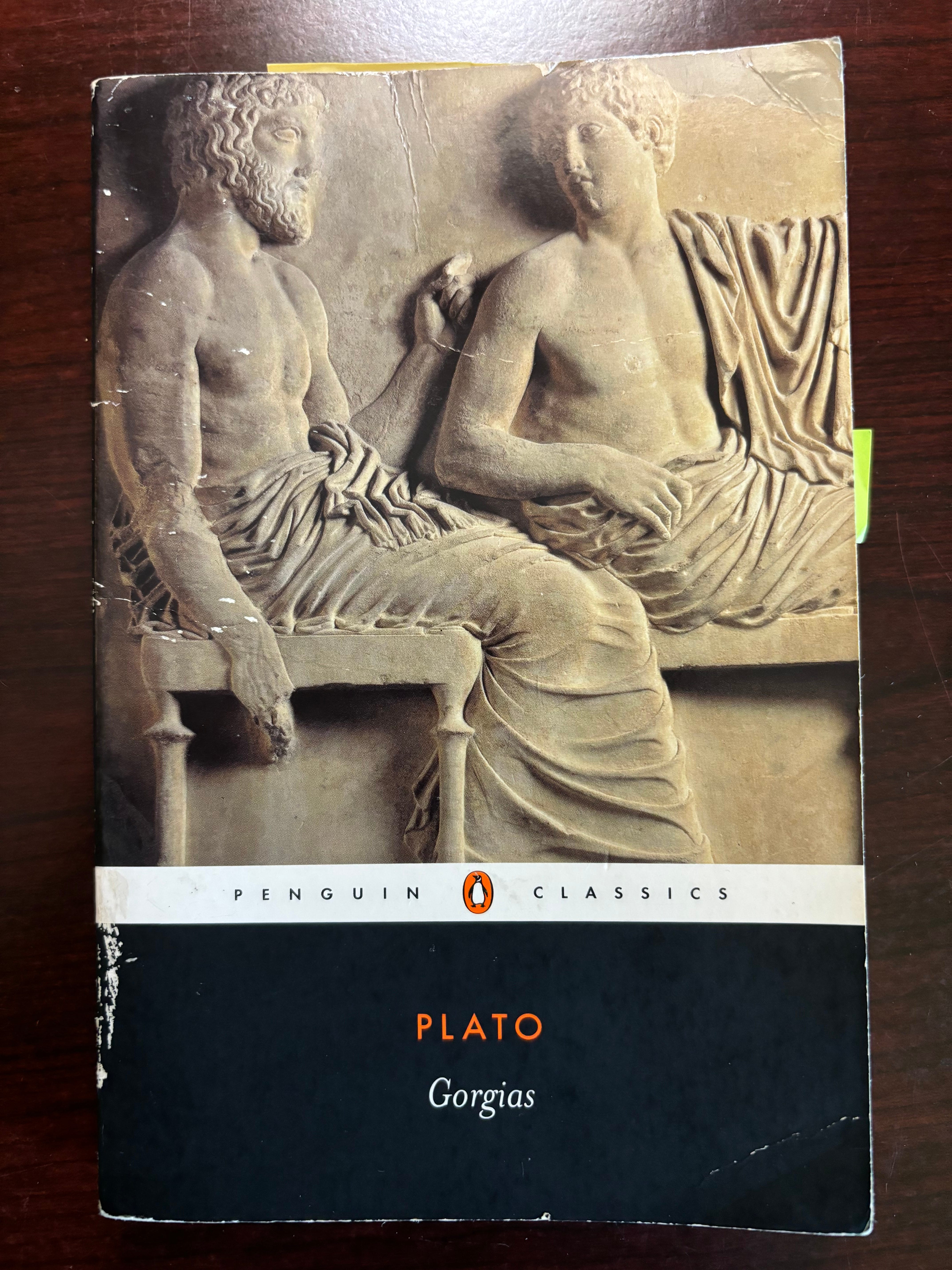
In Gorgias (493d), Plato has Socrates debate Callicles about the nature of the good life. Socrates compares the undisciplined person to a leaky jar. If someone attempts to fill a broken vessel with water, the liquid continually drains away. The more one pours in, the more one must labor. The effort never ends.
The holes in the jar symbolize uncontrolled desires—luxury, ambition, sensuality without measure. For Socrates, the miserable life is not the life of deprivation but the life of endless craving. The temperate person, by contrast, possesses a sound jar. Once filled with moderate and necessary pleasures, it remains full. Contentment comes not from increasing intake but from repairing the vessel.
The jar thus represents the structure of the inner person. Disorder produces leakage. Order produces rest.
Diogenes and the Jar of Autarky
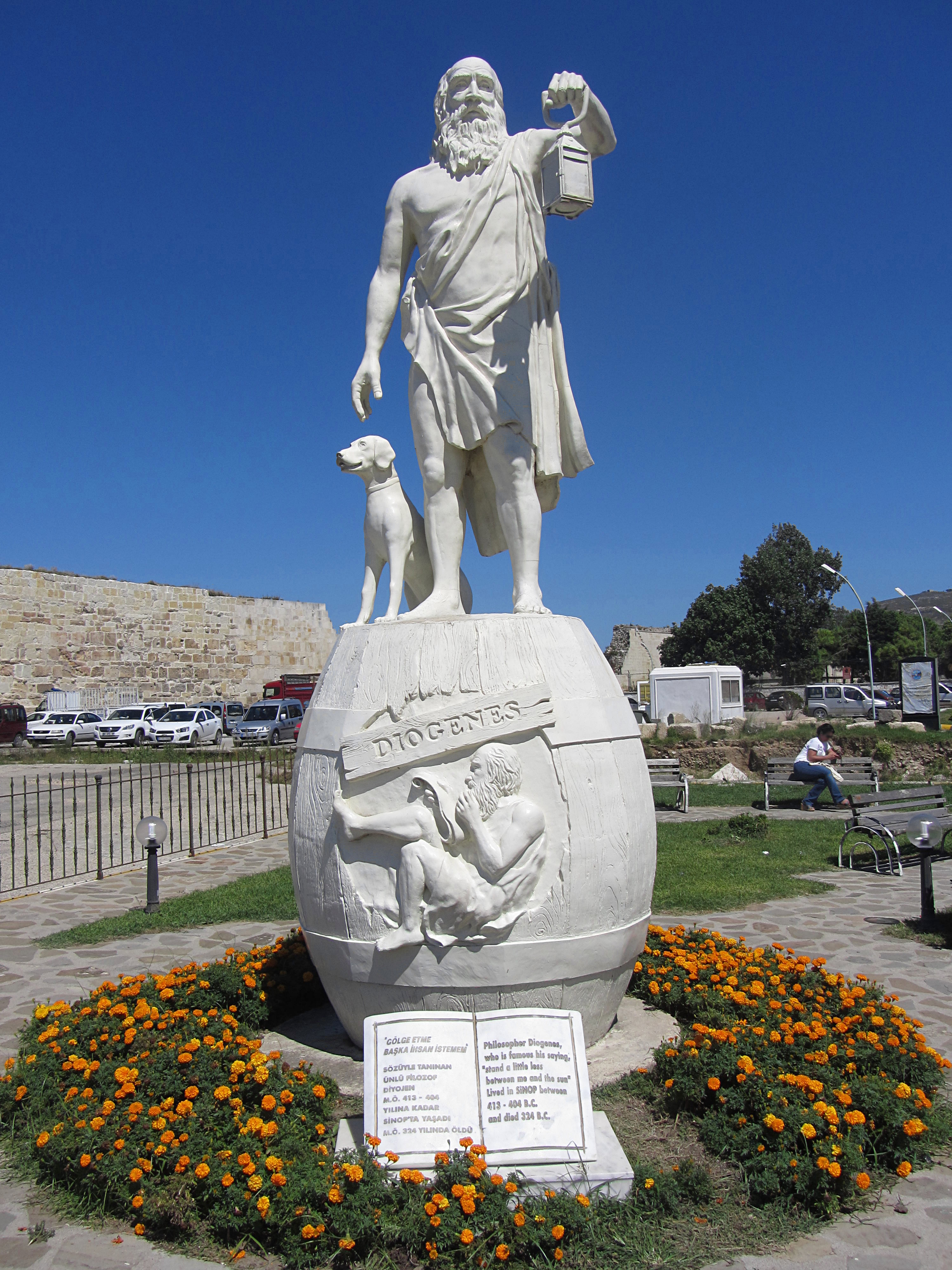
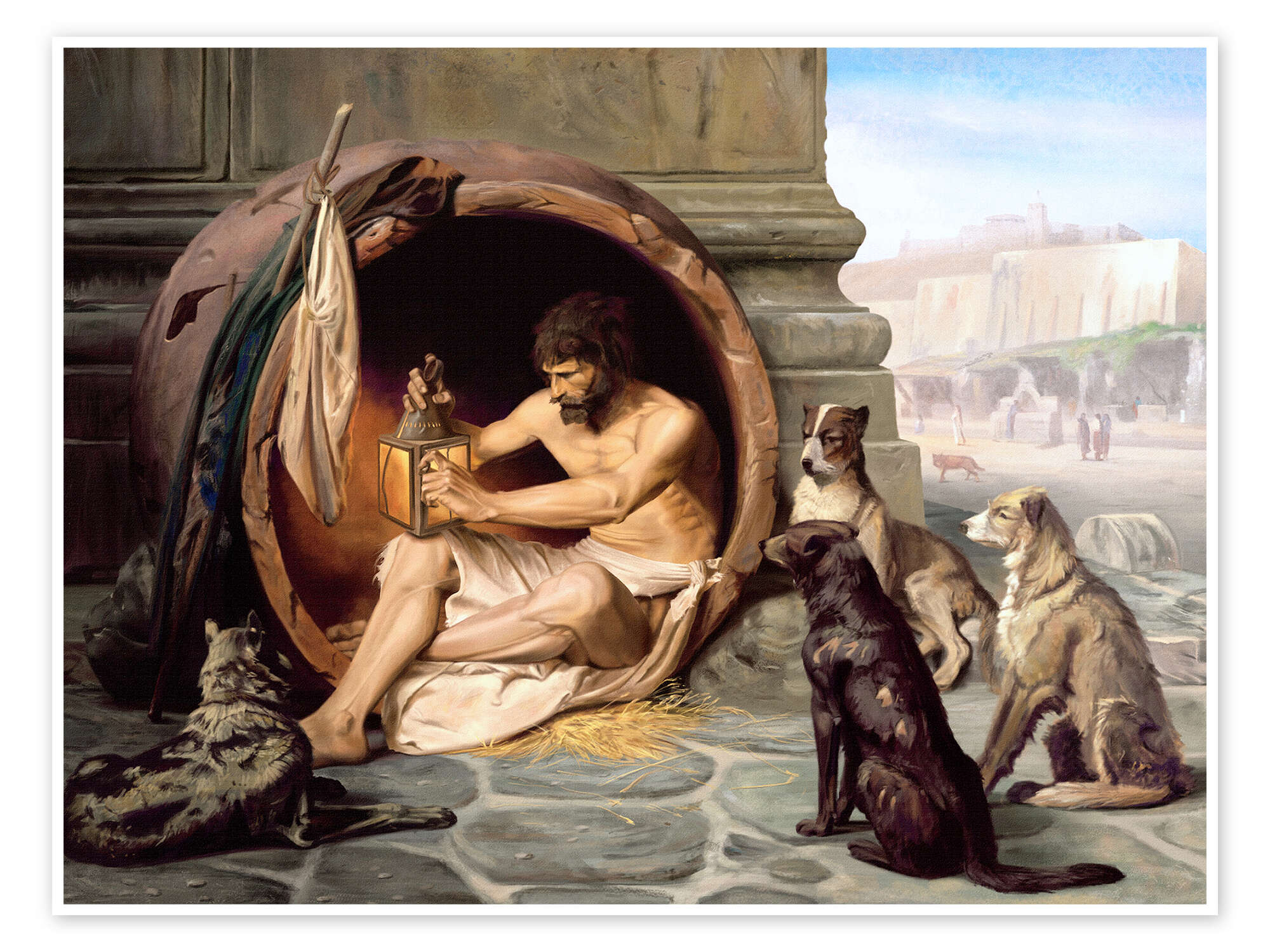


The Cynic philosopher Diogenes of Sinope radicalized the metaphor by inhabiting a jar (a pithos) in the marketplace of Athens. Unlike Plato’s psychological image, Diogenes’ jar was literal. By living inside a clay container, he rejected property, status, and luxury. When he saw a boy drink water from his hands, he threw away his cup—recognizing it as unnecessary.
His life embodied autarky—self-sufficiency. Where Plato described the leaky vessel of excess desire, Diogenes eliminated the need to fill it at all. He minimized desire itself. Happiness was achieved not by accumulation but by subtraction.
Lucretius and the Shattered Vessel
The Epicurean poet Lucretius extended the vessel metaphor into a doctrine of mortality in De Rerum Natura. He argues that when a physical vessel is shattered, its contents scatter. So too, when the body—the vessel of the soul—is broken, the soul dissolves into its first bodies. If the body cannot hold together its animating principle once destroyed, how could the soul survive independently?
Here the jar signifies the physical integrity of the human organism. Once fractured, its contents disperse. The metaphor emphasizes impermanence and the material basis of life.
The Broken Jar in the Gospel of Thomas

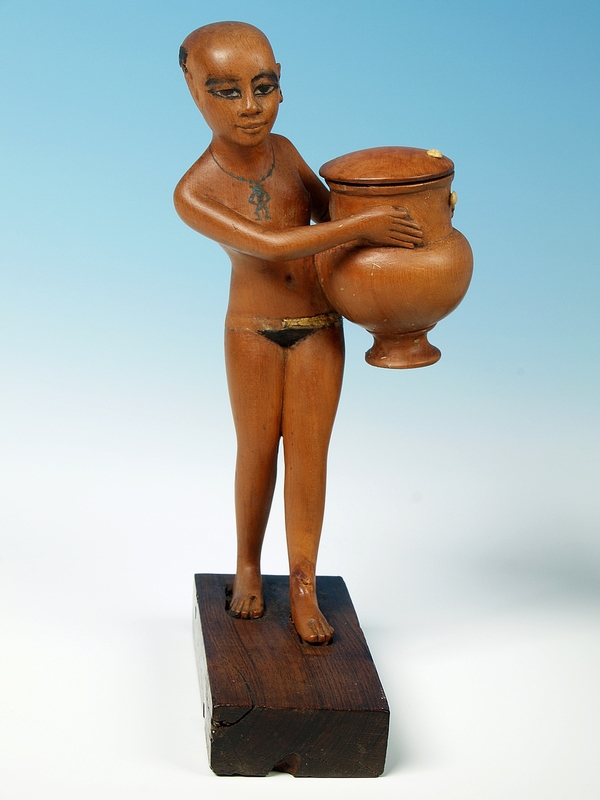


Saying 97 of the Gospel of Thomas reads:
“The kingdom of the father is like a certain woman who was carrying a jar full of meal. While she was walking on the road, still some distance from home, the handle of the jar broke and the meal emptied out behind her on the road. She did not realize it; she had noticed no accident. When she reached her house, she set the jar down and found it empty.”
This parable differs from Plato’s in tone and emphasis. There is no conscious indulgence here. The woman is unaware of the loss. The jar breaks silently. The contents are scattered unnoticed. Only upon arrival at the house does the emptiness become known.
The “kingdom” is compared not to fullness but to hidden loss. The meal—the substance of sustenance—has drained away during the journey. The house, which should receive provision, receives nothing.
In Greek philosophical terms, the jar is defective; but here the tragedy lies in ignorance. The woman does not perceive the leakage. The emptiness is discovered only at the end.
The image parallels the Platonic leaky jar, yet transforms it. In Plato, the leakage results from excessive desire. In Thomas, the leakage occurs during ordinary movement. The emphasis falls on awareness: one may be empty without realizing it.
The Gospel of Truth: Broken, Filled, and Perfected Jars


The Gospel of Truth expands the jar metaphor into a dramatic theological vision. It describes people who moved out of dwellings having jars that were not good in certain places. They broke them. The master of the house did not suffer loss; he rejoiced, because bad jars were replaced by full and perfected ones.
When the Word appeared, disturbance erupted among the jars:
“Some had been emptied, others filled; that is, some had been supplied, others poured out, some had been purified, still others broken up.”
Here the jars clearly represent human beings. Their interior condition varies—some empty, some full, some purified, some shattered. The appearance of the Word causes upheaval. The drawn sword with two edges divides and judges. Instability is exposed.
The text personifies “Error” (Greek πλάνη, planē). Error is not a cosmic being but a collective condition—a personification of sin and blindness, embodied historically in corrupt religious authority and spiritual ignorance. When knowledge approaches, Error is emptied. It has nothing inside.
The jars become symbols of inner content. Full jars are anointed. When anointing dissolves, the jar empties, revealing deficiency. But the one who lacks nothing has no seal removed and no emptiness exposed. What is lacking, the perfect Father fills again.
Unlike Plato’s solution—temperance—or Diogenes’—renunciation—the Gospel of Truth presents restoration through knowledge and anointing. The broken jar is not merely a moral failure; it is a state requiring healing and refilling.
Philosophical Parallels and Transformations
Across these traditions, several themes converge:
The Vessel as the Human Condition
In Plato, the jar represents the structure of desire.
In Lucretius, it represents bodily integrity.
In Thomas and the Gospel of Truth, it represents the interior state of persons.Leakage and Emptiness
For Socrates, endless pleasure leaks away.
In Thomas, sustenance drains unnoticed.
In the Gospel of Truth, some jars are emptied when truth appears.Breakage as Judgment or Mortality
In Lucretius, shattering equals dissolution.
In the Gospel of Truth, breaking may be purgative—removing defective vessels so perfected ones can replace them.Fullness and Rest
Plato’s sound jar achieves contentment.
The Gospel of Truth speaks of jars “made perfect,” filled again by the Father, resting in paradise.
The Sword and the Jar
A striking feature in the Gospel of Truth is the double-edged sword. When the Word appears, disturbance spreads. The jars are shaken. Order collapses. The metaphor suggests that truth destabilizes what is unstable. What is already cracked cannot endure the shock.
In Plato, disorder precedes suffering. In the Gospel of Truth, revelation exposes disorder. The arrival of knowledge does not create emptiness; it reveals it.
Conclusion: From Moral Psychology to Spiritual Restoration
The broken jar moves from Greek philosophy into early Christian metaphor without losing its core meaning. It always signifies containment—the capacity to hold something essential.
For Socrates, that essential thing is moderate pleasure.
For Diogenes, it is self-sufficiency without excess.
For Lucretius, it is the animating principle of life.
For the Gospel of Thomas, it is hidden sustenance lost through unawareness.
For the Gospel of Truth, it is inner fullness disrupted by Error and restored by knowledge.
In every case, the question is the same: what does the vessel contain, and can it hold it?
The answer determines whether the jar leaks endlessly, shatters into dissolution, arrives home empty, or stands full and perfected in rest.
#
The Broken Jar, the Filled Vessel, and the Overthrow of Error
In Saying 97 of the Gospel of Thomas we read:
“Jesus said, ‘The kingdom of the father is like a certain woman who was carrying a jar full of meal. While she was walking on the road, still some distance from home, the handle of the jar broke and the meal emptied out behind her on the road. She did not realize it; she had noticed no accident. When she reached her house, she set the jar down and found it empty.’”
The image is quiet and devastating. There is no dramatic shattering. The jar does not explode in her hands. Instead, the handle breaks silently. The meal pours out gradually along the road. The woman is unaware. Only when she reaches the house does she discover the loss.
The parable describes hidden depletion. The kingdom is compared not to visible triumph, but to a condition in which something essential has drained away unnoticed. The house stands ready to receive fullness, yet the jar arrives empty. The crisis is not noise but ignorance.
The Gospel of Truth expands this same imagery:
“If indeed these things have happened to each one of us, then we must see to it above all that the house will be holy and silent for the Unity - as in the case of some people who moved out of dwellings having jars that in spots were not good. They would break them, and the master of the house would not suffer loss. Rather, is glad, because in place of the bad jars (there are) full ones which are made perfect. For such is the judgment which has come from above. It has passed judgment on everyone; it is a drawn sword, with two edges, cutting on either side. When the Word appeared, the one that is within the heart of those who utter it - it is not a sound alone, but it became a body - a great disturbance took place among the jars, because some had been emptied, others filled; that is, some had been supplied, others poured out, some had been purified, still others broken up. All the spaces were shaken and disturbed, because they had no order nor stability. Error was upset, not knowing what to do; it was grieved, in mourning, afflicting itself because it knew nothing. When knowledge drew near it - this is the downfall of (error) and all its emanations - error is empty, having nothing inside. That is why Christ was spoken of in their midst, so that those who were disturbed might receive a bringing-back, and he might anoint them with the ointment. This ointment is the mercy of the Father, who will have mercy on them. But those whom he has anointed are the ones who have become perfect. For full jars are the ones that are usually anointed. But when the anointing of one (jar) is dissolved, it is emptied, and the reason for there being a deficiency is the thing by which its ointment goes. For at that time a breath draws it, a thing in the power of that which is with it. But from him who has no deficiency, no seal is removed, nor is anything emptied, but what he lacks, the perfect Father fills again. He is good. He knows his plantings, because it is he who planted them in his paradise. Now his paradise is his place of rest.”
Here jars represent persons. Some are defective “in spots.” They are broken without loss to the master. The breaking is judgment, but also replacement. Bad jars are exchanged for “full ones which are made perfect.” The sword cuts. The Word appears. Disturbance spreads. Emptiness is revealed.
The Hebrew Scriptures provide a long foundation for this vessel imagery. In Jeremiah 18:1–6 the prophet sees the potter shaping clay, and when the vessel is marred, he reworks it according to his will. In Jeremiah 19:1–11 the jar is shattered before the elders as a sign of irrevocable judgment. Lamentations 4:2 laments that the precious sons of Zion are “esteemed as earthen pitchers.” Isaiah 29:16 asks, “Shall the potter be regarded as the clay?” Isaiah 45:9 declares, “Woe to him who strives with his Maker.” Psalm 31:12 confesses, “I am like a broken vessel.”
The jar is never neutral. It symbolizes formed humanity—shaped, fragile, accountable.
Other passages intensify the theme of filling and emptying. In 2 Kings 4:1–7 empty vessels are gathered and miraculously filled with oil until no more jars remain. The abundance stops only when there are no more containers. Fullness depends on available vessels. In 1 Samuel 26:11–12 the jar of water at Saul’s head becomes a sign of vulnerability and mercy. The vessel marks proximity to life and death.
Breaking without loss is also a scriptural pattern. Isaiah 30:14 speaks of a vessel broken so completely that no shard remains to carry fire or water. Psalm 2:9 proclaims, “You shall dash them in pieces like a potter’s vessel.” Judges 7:19–20 describes Gideon’s men breaking jars to reveal light within, a destruction that brings victory. In 2 Kings 13:17–19 striking the arrows determines the extent of triumph, suggesting that incomplete action limits deliverance.
The Gospel of Truth echoes these patterns: jars are broken, yet the master “would not suffer loss.” The destruction of defective vessels serves restoration. The breaking is not annihilation of value but removal of corruption.
Central to the passage is “Error,” Greek πλάνη (planē). It is not a cosmic being but a personification—a collective noun representing sin, blindness, and corrupt leadership. Scripture repeatedly speaks of wandering and deception in collective terms. Isaiah 53:6 states, “All we like sheep have gone astray.” Jeremiah 8:5 asks, “Why have these people turned away in perpetual backsliding?” Hosea 4:6 warns, “My people are destroyed for lack of knowledge.” Isaiah 44:20 describes the deceived: “A deceived heart has turned him aside.” Proverbs 14:12 cautions, “There is a way that seems right to a man, but its end is the way of death.”
Error is emptiness masquerading as fullness. It is a jar that appears intact yet contains nothing of permanence. When knowledge approaches, “error is empty, having nothing inside.” The exposure itself is judgment.
Psalm 119:104 affirms, “Through your precepts I get understanding.” Knowledge overturns wandering. The Gospel of Truth declares that when knowledge draws near, this is “the downfall of (error) and all its emanations.” The collapse of deception causes grief and disturbance because structures built on ignorance cannot endure the sword of discernment.
The anointing imagery intensifies the vessel theme. “Full jars are the ones that are usually anointed.” Oil signifies mercy and completion. Yet “when the anointing of one (jar) is dissolved, it is emptied.” Loss of sealing results in deficiency. Only the one without deficiency retains fullness: “what he lacks, the perfect Father fills again.”
This returns us to Thomas 97. The woman’s jar leaks unnoticed. The Gospel of Truth reveals jars shaken and broken by the Word. In both, the crisis is interior. One empties through ignorance; others are shattered through judgment. In every case, the issue is whether the vessel can hold what it was meant to contain.
The house in Thomas stands as the destination. The Gospel of Truth says the house must be “holy and silent for the Unity.” Rest comes not through denial of fragility but through refilling and reformation. The potter reshapes. The master replaces defective jars. The Father fills deficiency.
Thus jar imagery forms a continuous thread: shaped by a maker, vulnerable to fracture, capable of being filled, subject to judgment, yet also eligible for restoration. Error, as collective wandering and sin, drains vessels from within. Knowledge exposes and overthrows it. The broken jar is not merely ruin; it is revelation. And in that revelation, emptiness is either confirmed—or filled again in the place of rest.

No comments:
Post a Comment